
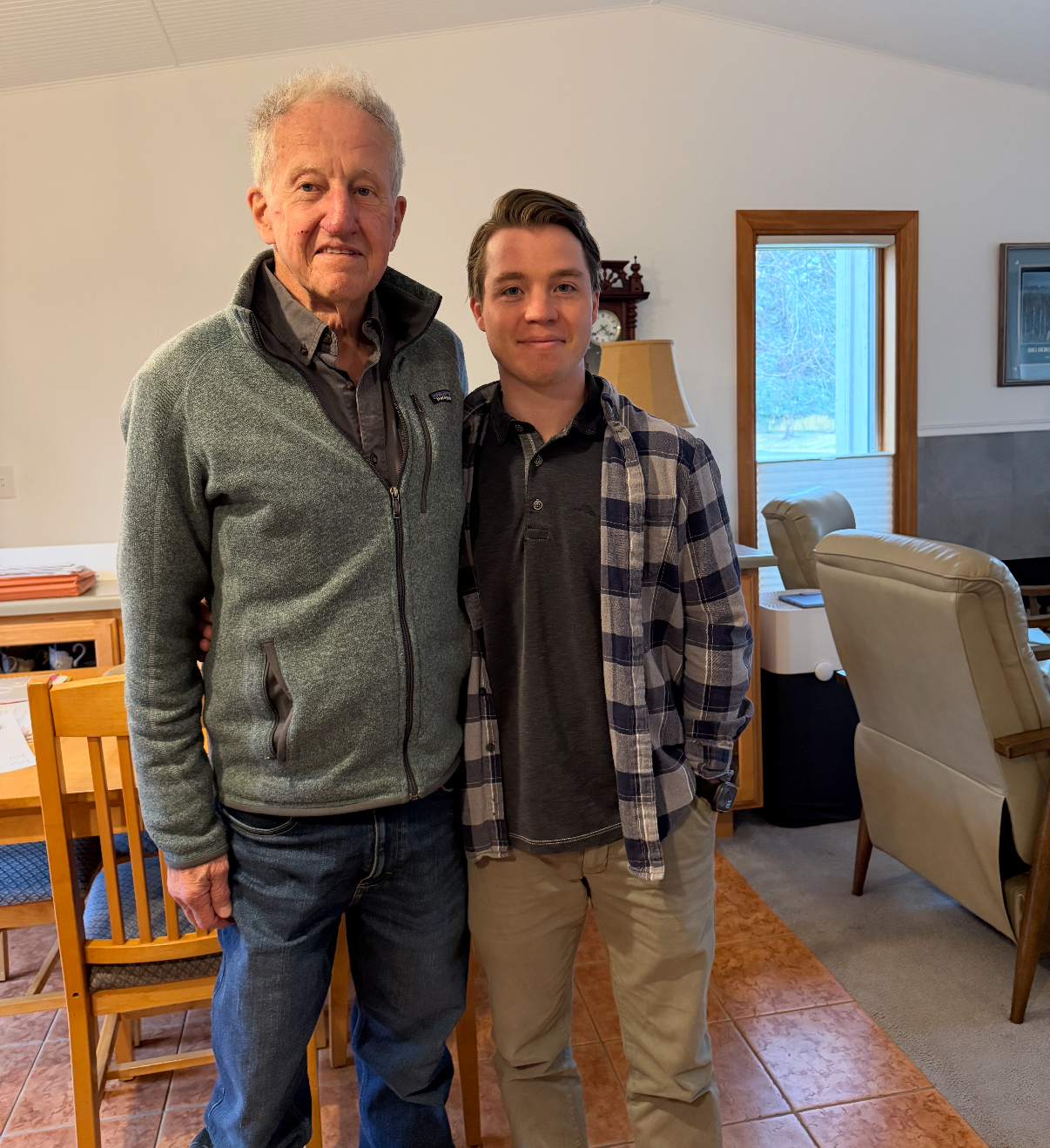
There are some conversations that stay with you long after they end.
Not because they are polished or profound in the traditional sense, but because they reveal something deeply human in the pauses, the wandering stories, the moments of uncertainty, and the flashes of joy that emerge in between.
Recently, a caregiver sat down with Chester, an older adult living with dementia, and asked him a series of simple life questions. What followed was not a clinical discussion about memory loss or aging. It was something much more personal: reflections on love, biking through the countryside, breakfast outings, neighbors, old adventures, regret, kindness, and what it means to keep living fully even as life changes.
At Biscochito, these are the kinds of moments that matter most. Care is not only about tasks, schedules, or symptom management. It is about relationship. It is about remaining connected to the parts of ourselves that still feel alive and meaningful.
“The Best Part of My Day”
When Chester was asked what he looks forward to most these days, his answer was beautifully simple.
Going for walks. Having breakfast. Spending time in the home he and his wife have shared for 44 years.
There was something deeply grounding in the way he spoke about these ordinary rhythms. Dementia had changed many things in his life, but these touchstones remained.
He talked about how much he used to love biking long distances, sometimes riding 100 miles at a time despite living with the lasting effects of polio. He described the joy of being outdoors and noticing new details in the landscape every time he rode through the countryside.
What stood out was not only the memories themselves, but the feeling behind them. Even now, Chester still lights up when talking about movement, fresh air, community, and exploration.
For many seniors living with dementia, familiar activities continue to carry emotional meaning long after other forms of memory become difficult to access. A walk around the neighborhood, hearing birds outside, or sitting in a favorite café can help someone feel oriented, connected, and more fully themselves.
The Power of Being Known
Throughout the conversation, Chester returned again and again to people.
His wife, Trish. The neighbors in his town. The welcoming feeling of the local breakfast spot. The simple joy of seeing familiar faces.
At one point, he described his town as “the kind of people that you like to be around.”
That sentence says so much about what many older adults truly long for: not simply assistance, but belonging.
Living with dementia can sometimes create an invisible kind of isolation. Conversations become harder. Confidence changes. People may begin withdrawing socially, especially when they feel embarrassed or frustrated by memory loss.
Near the end of the conversation, Chester reflected honestly on some of those feelings. He shared that before this caregiving relationship developed, there were stretches where he did not feel like talking to anyone or going anywhere. Then he quietly added:
“I’m really happy that you came into my life.”
Moments like this remind us that caregiving is deeply relational work.
At Biscochito, caregivers often become trusted companions woven into the fabric of someone’s daily life. Sometimes support means helping with meals, medication reminders, transportation, or safety. Other times, it means sitting together and listening to stories that may wander and circle before arriving somewhere unexpected.
The relationship itself becomes part of the care.
What Dementia Teaches About Slowing Down
One of the most moving parts of Chester’s conversation was the way he navigated moments where words became difficult to find.
Several times, he paused mid-thought, searching for language that would not quite come. He openly acknowledged the frustration of dementia and the changes it has brought to his life.
And yet, woven throughout the conversation was also humility, humor, tenderness, and reflection.
He spoke about learning to be a better person. He remembered hurting a cat as a child and how guilty he felt afterward. He reflected on trying not to hurt others. He expressed gratitude for kindness and companionship.
In many ways, the conversation revealed something important about dementia support that often gets overlooked: people living with dementia are still deeply emotionally and spiritually present.
Even when cognition shifts, the need for connection, purpose, reflection, and care remains.
This is one reason compassionate in-home care can make such a profound difference. Familiar surroundings, trusted relationships, and consistent companionship often create more space for ease, comfort, and emotional grounding than institutional environments alone.
Related services:
- Dementia Support Services
- In-Home Care Services
- Care on Call
Supporting Someone Living With Dementia
Every person experiences dementia differently, but there are a few themes caregivers consistently see make a meaningful difference:
Stay connected to familiar routines
Simple rhythms like walks, favorite meals, music, or regular outings can provide comfort and continuity.
Listen more than you correct
People living with dementia often remember emotional tone more than factual details. Patience and presence matter.
Encourage community
Isolation can quietly deepen cognitive and emotional challenges. Small social interactions can have enormous value.
Focus on what still brings joy
Rather than centering only on loss, supportive caregiving can help nurture the activities, relationships, and experiences that still feel meaningful.
Organizations like the Alzheimer’s Association and the National Institute on Aging continue to emphasize the importance of relational and person-centered dementia care.
Living Well, Even As Life Changes
Toward the end of the interview, Chester was asked one final question:
“What does living well mean to you?”
The answer did not come easily. He paused. Searched. Reflected.
But perhaps the real answer had already been unfolding throughout the entire conversation.
Living well can mean:
- Having someone walk beside you
- Feeling welcomed by your community
- Remembering old adventures
- Watching birds outside
- Sharing breakfast with people you care about
- Being seen not only for what has changed, but for who you still are
At Biscochito, caregiving is rooted in this understanding: that meaningful connection remains possible at every stage of aging, and that even in seasons shaped by memory loss, there is still room for joy, reflection, tenderness, and belonging.